For global buyers, choosing an Aluminum Door is not simply a matter of style. It affects thermal comfort, security, maintenance, and installation costs. In 2026, product decisions are becoming more technical. Buyers compare profiles, glass packages, hardware, finishes, drainage, and tested performance. A slim frame may look impressive in a showroom. Yet, it may perform poorly in a harsh coastal climate without suitable coatings and seals. Real projects teach this quickly. A door that opens smoothly in a factory can behave differently after transport and installation.
This guide examines the top aluminum door types for residential, commercial, and mixed-use projects. It considers sliding, folding, hinged, pivot, lift-and-slide, and thermally broken systems. Each type serves a different opening size, traffic level, and design brief. We will connect visible features with practical details, including U-values, airtightness, water resistance, wind loads, glass weight, threshold design, and replacement access. Local building requirements still matter. Product data should be verified against the destination market, not copied from a catalogue.
Experienced buyers also look beyond the lowest quotation. They request finish samples, section drawings, test reports, warranty terms, spare-part plans, and installation guidance. Small details matter. A poorly aligned roller can turn a premium door into a daily frustration. This article offers a balanced starting point rather than a universal ranking. Some recommendations may change after site surveys, climate checks, or budget reviews. That uncertainty is useful. It reminds buyers to question attractive specifications and confirm performance before placing an international order.
What Defines Aluminum Doors in 2026
In 2026, aluminum doors are defined by more than slim frames and polished finishes. Global buyers now examine thermal breaks, air leakage, drainage, security, and repair access. The International Energy Agency reports that buildings consume about 30% of global final energy. Door performance therefore affects more than appearance.
A thermally broken aluminum door uses a polyamide separator between interior and exterior profiles. This reduces heat transfer around the frame. Low-emissivity glass, insulated panels, and properly sealed thresholds improve the complete system. Not just the frame.
In coastal projects, installers also check coating durability and drainage paths. Small defects can allow water behind the sill.
Sustainability is becoming measurable. The International Aluminium Institute states that recycling aluminum requires about 95% less energy than producing primary aluminum. Buyers should request recycled-content evidence, environmental declarations, and clear alloy information. However, recycled content alone does not guarantee a responsible product. Poor design can shorten service life. A door that looks elegant but needs frequent replacement is not truly efficient.
Digital fabrication also shapes the 2026 market. Automated cutting and factory quality checks can improve dimensional accuracy. Yet site conditions remain unpredictable. Walls move, floors settle, and installation teams vary. Buyers should ask for tested performance data, maintenance instructions, replacement-part availability, and documented installation procedures. A narrow frame is not automatically better. The best aluminum door is the one that performs reliably after years of real use.
Key Aluminum Door Types for Global Buyers
2026 Top Aluminum Door Types for Global Buyers
Global buyers are not choosing aluminum doors by appearance alone. Climate, opening size, maintenance, and installation skill often decide long-term performance.
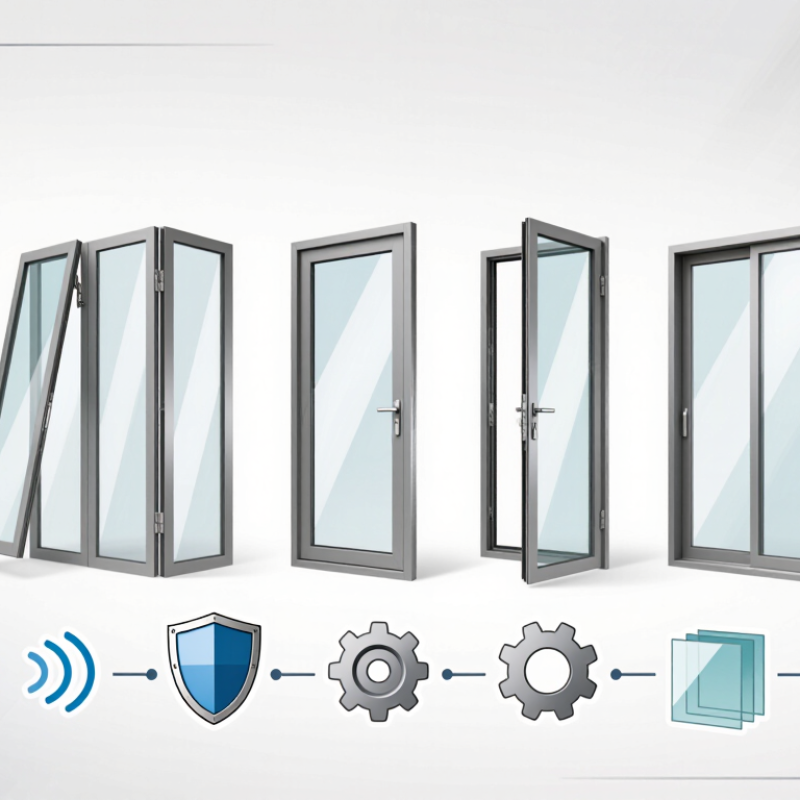
Sliding doors suit balconies, patios, and narrow corridors because their panels move beside the wall. Hinged doors remain practical for entrances, utility rooms, and high-traffic areas. Folding systems create wide openings, but their tracks need careful leveling.
Choose by building use.
Lift-and-slide doors support large glass panels with less operating force. They work well in hotels, premium homes, and commercial showrooms. Thermal-break doors are more suitable for cold or hot climates. Their polyamide separators reduce direct heat transfer through the frame.
The International Energy Agency reports that buildings consume about 30% of global final energy, so frame performance deserves serious attention. A beautiful door can still waste energy when seals are weak.
For compact openings, thermally improved hinged doors can offer a simpler solution. Storefront systems provide visibility and flexible module sizes. Fire-rated aluminum doors require verified testing and certified hardware, not just thicker profiles. The exact requirement varies by country and building type.
Buyers should request air, water, wind, thermal, and corrosion test results before ordering. The International Aluminium Institute notes that recycled aluminum uses about 5% of the energy required for primary aluminum production. That supports circular sourcing, although recycled content alone does not guarantee quality.
I have seen specifications focus heavily on profile alloy while ignoring drainage and installation tolerances. That is a costly blind spot.
Materials, Profiles, Glass, and Hardware Options
Aluminum doors remain a practical choice for global construction projects because they combine low weight, strength, and design flexibility. The right specification depends on climate, opening size, traffic frequency, and installation quality. In coastal areas, powder-coated or anodized finishes need suitable corrosion resistance. Inland projects may allow more finish options, but surface preparation still matters.
Profiles shape the door’s performance. Thermally broken aluminum profiles reduce heat transfer between indoor and outdoor surfaces. Non-thermal profiles can suit mild climates, interior partitions, or unconditioned spaces. Slim profiles create wider sightlines, while reinforced sections support larger glass panels. I have found that oversized doors often fail when profile strength is selected by appearance alone. Structural calculations should guide the choice.
Glass changes comfort, safety, and daily maintenance. Low-emissivity double glazing improves insulation, while laminated glass helps retain fragments after breakage. Tempered glass offers stronger impact resistance, but it cannot be cut after treatment. Tinted or solar-control glass can reduce glare in bright rooms. However, darker glass may increase heat absorption in some conditions. Hardware deserves equal attention. Stainless steel hinges, multipoint locks, rollers, and weather seals should match the door’s weight and exposure. Poor rollers create dragging and noise within months. Small details matter.
Field checks are essential. Confirm drainage paths, gasket compression, frame alignment, and fastener compatibility before handover. A beautiful aluminum door can still perform poorly when the sill is uneven.
How to Compare Performance, Costs, and Applications
2026 Top Aluminum Door Types for Global Buyers
How to Compare Performance, Costs, and Applications
Aluminum doors now cover residential, retail, hospitality, and industrial projects. Hinged doors suit entrances needing simple operation and strong weather seals. Sliding doors save floor space, especially on balconies and compact commercial fronts. Lift-and-slide systems offer wider openings, but their hardware and installation costs are higher. Folding doors create large openings, although frequent movement can increase maintenance needs. Pivot doors deliver visual impact, yet they require careful structural planning and accurate alignment.
Performance should be compared through thermal insulation, air leakage, water resistance, acoustic control, and security hardware. A thermal break can reduce heat transfer across the frame. Glass selection also changes comfort and energy use. In coastal areas, buyers should check coating durability and corrosion resistance. In busy buildings, cycle testing and replaceable hardware matter more than appearance alone. Measure twice. Details matter. During project reviews, I have seen low-priced doors become expensive after poor installation, repeated adjustments, or unavailable spare parts. Cost comparisons should include transport, glazing, labor, maintenance, and expected service life. A cheaper quote may not be cheaper.
Tips: Request tested performance data, not vague claims. Compare complete door assemblies, including glass, locks, seals, and accessories. Confirm local installer experience and replacement-part availability. Ask for samples when color, texture, or frame sightlines affect the project. Leave room for uncertainty; site conditions often change the original estimate.
Global Standards, Sourcing, and Selection Criteria
2026 Top Aluminum Door Types for Global Buyers
Global buyers can choose thermal-break hinged doors, sliding doors, folding systems, or pivot doors. Each type serves a different opening size and traffic pattern. Thermal-break profiles reduce heat transfer between indoor and outdoor surfaces. Sliding doors save floor space but require precise track alignment. Folding doors create wide openings, although their hardware needs regular adjustment.
Standards should guide sourcing, not replace project judgment. Ask suppliers for tested air leakage, water penetration, wind load, thermal performance, and operating-cycle results. Requirements vary by destination market. European projects may reference EN 14351-1, while North American projects often use regional fenestration standards. Confirm the accepted test method with the local consultant. Check alloy grade, wall thickness, powder-coating performance, glass specification, drainage design, and spare-part availability. Clear technical drawings prevent expensive misunderstandings.
Tips: Request a complete sample corner, not only a profile. Test the lock, rollers, seals, and threshold by hand. Compare delivered cost, packaging, lead time, and replacement support. A low quotation can hide weaker hardware or incomplete documents. I have seen attractive samples fail during installation because tolerances were unclear. That is a useful warning. No door suits every climate. Recheck wind exposure, salt air, heat, and cleaning practices before approving the order.
FAQS
They are lightweight, strong, and flexible in design. Their performance still depends on climate, opening size, traffic, and installation quality.
Choose them when indoor comfort and energy control matter. They reduce heat transfer across the frame. This may be unnecessary for mild interiors.
Sometimes, but appearance should not decide structural strength. Larger panels may need reinforced sections and proper structural calculations.
Low-emissivity double glazing improves insulation. Laminated glass helps retain fragments after breakage. Tinted glass reduces glare, but darker surfaces may absorb more heat.
Match hinges, locks, rollers, and seals to the door’s weight and exposure. Weak rollers may cause dragging and noise within months.
Sliding doors save floor space and need accurate track alignment. Folding systems create wide openings but need regular adjustment. Pivot doors suit distinctive, larger entrances.
Request technical drawings, test results, glass details, drainage information, and replacement support. Inspect a complete sample corner, not only a profile.
Check drainage paths, gasket compression, frame alignment, fastener compatibility, and threshold levels. A beautiful door can still perform poorly. I sometimes underestimate the sill.
Conclusion
In 2026, the Aluminum Door continues to evolve as a durable, lightweight, and adaptable solution for residential, commercial, and industrial projects worldwide. Global buyers can choose from sliding, hinged, folding, pivot, lift-and-slide, and thermally broken door systems, each suited to different space, climate, security, and design requirements. Modern options include varied aluminum alloys, profile depths, surface finishes, insulated or standard frames, energy-efficient glazing, and hardware configurations that support comfort, safety, and long-term operation.
Selecting the right system requires comparing thermal performance, air and water resistance, structural strength, acoustic insulation, maintenance needs, service life, and total cost rather than focusing only on the initial price. Buyers should also review applicable regional standards, testing documentation, installation requirements, packaging, lead times, and after-sales support. By matching door type, materials, glass, and hardware to the intended application and local building conditions, purchasers can achieve a practical balance of performance, appearance, compliance, and value.

 Fortis Window