7 Tips for Choosing an Aluminum Bathroom Door

Time:2026-10-09 Author:Aria
0%

Choosing an Aluminum Bathroom Door is more than matching a frame to glossy tiles. In real bathrooms, steam, splashes, cleaning chemicals, and daily opening can expose weak materials quickly. A door may look modern in a showroom, yet feel loose after months of use. That gap between appearance and performance deserves careful attention. This guide presents seven practical tips based on installation experience, material knowledge, and manufacturer specifications. It focuses on details homeowners and contractors can verify, including alloy quality, surface treatment, hardware, glass, drainage, measurements, and after-sales support. Small checks matter.

A reliable choice should resist corrosion, close smoothly, and suit the room’s ventilation and moisture levels. Look for documented product information rather than vague claims. Ask about aluminum grade, coating thickness, hinge capacity, seal performance, and available replacement parts. Independent testing or clear technical data can strengthen confidence, although paperwork does not replace careful inspection. Measure the opening at several points. Walls are rarely perfectly square. I have seen attractive doors fail because the lower track collected water or the seal was cut too short. That is not dramatic, but it is costly and frustrating. The best decision balances design, maintenance, safety, budget, and long-term use. Still, no product is flawless. Even a well-made Aluminum Bathroom Door needs correct installation, routine cleaning, and occasional adjustment. These seven tips will help you question assumptions and choose with greater confidence.
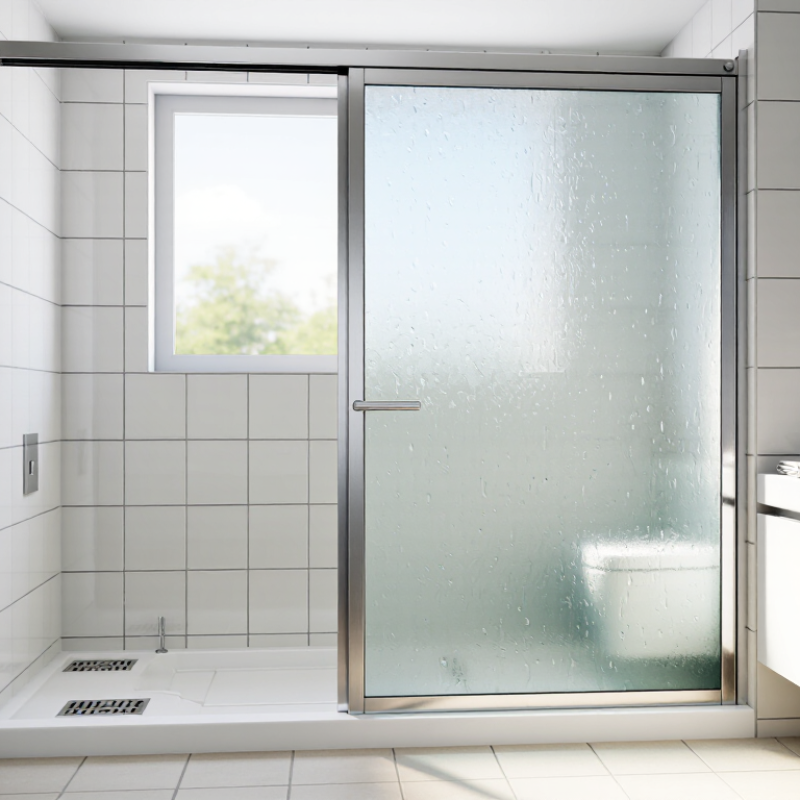
7 Tips for Choosing an Aluminum Bathroom Door

Define Your Bathroom Door Requirements and Available Space

Before choosing an aluminum bathroom door, define how the room must function. Measure the opening width, height, wall thickness, and floor level at several points. Old floors are rarely perfectly flat. Record the smallest measurement, not the most convenient one. Mark the sink, toilet, shower, and towel rail on a simple plan. Space matters. An inward-opening door may strike the toilet or reduce shower access. An outward swing can improve emergency access, but it needs a clear landing area. Pocket or sliding doors save space, though their wall cavity may contain pipes or wiring. Check that detail before ordering.

Privacy and ventilation also shape the specification. Decide whether the room needs a solid panel, frosted glazing, or screened openings. Moisture-rich rooms need stable hardware, sealed edges, and drainage-friendly thresholds. Aluminum resists rust well, but it does not excuse poor installation. Ask for corrosion-resistant hinges and compatible fasteners, especially near coastal air. I would also check the door’s weight and frame stiffness. A light-looking frame can still sag if unsupported. This is where many plans fail.

Leave enough clearance for cleaning and future repairs. A 10-millimeter gap may look neat, yet it can bind after the floor expands or settles. Follow local building and accessibility requirements, and confirm installation tolerances in writing. Take photos before the wall closes. They help later. My own preference is to measure twice, then question the first result. Bathroom layouts change, and a technically correct door can still feel awkward every morning.

Compare Aluminum Grades, Finishes, and Corrosion Resistance

7 Tips for Choosing an Aluminum Bathroom Door

Tip 1: Check the aluminum grade. 6063 aluminum suits most bathroom frames because it offers clean extrusion lines and good corrosion resistance. 6061 is stronger, but it may cost more than necessary for a standard interior door. Tip 2: Inspect the alloy thickness, not only the grade. A thin frame can flex around the hinges. Tip 3: Match the finish to moisture levels. Anodized aluminum creates a durable surface that resists peeling and handles daily splashes well.

Tip 4: Consider powder coating for color variety and a softer visual effect. Ask how the coating covers corners, screw holes, and cut edges. These small areas often fail first. Tip 5: Test corrosion resistance near the shower zone. Salt, cleaning chemicals, and trapped water can damage weak finishes. A coastal home needs stricter material selection than a dry inland bathroom. Tip 6: Choose stainless or corrosion-resistant hardware. Excellent aluminum cannot compensate for rusty hinges.

Tip 7: Examine drainage and ventilation details. Water should not sit inside the lower frame. In installation checks, I have seen beautiful doors develop stains because the track stayed wet overnight. That detail is easy to miss. Request finish samples, then scratch an unseen area carefully. This is not a laboratory test, but it may reveal a fragile coating. Also inspect the color under bright light. Small shade differences can appear after repairs. A reliable supplier should provide grade information, coating specifications, and practical maintenance instructions.

Choose the Right Door Style, Size, and Opening Direction

7 Tips for Choosing an Aluminum Bathroom Door

Choose the right door style before measuring.

Tip 1: Select a sliding door for narrow bathrooms. It saves swing space beside the vanity.
Tip 2: Choose a hinged door when the room allows a clear approach. The opening feels wider and is easier to clean.
Tip 3: Consider a framed aluminum door for stronger alignment. Slim profiles look lighter, but they may reveal installation errors.

Size affects daily comfort.

Tip 4: Measure the finished opening at the top, middle, and bottom. Walls are rarely perfectly square.
Tip 5: Keep at least a 32-inch clear opening where accessibility matters. This minimum appears in the 2010 ADA Standards for accessible routes and doors. A wider opening can still be more practical for towels, children, or mobility aids.
Tip 6: Check the shower enclosure depth, not only the wall width. Houzz’s 2024 U.S. Bathroom Trends Study reports that many homeowners are enlarging shower areas, making door clearance more important.

Opening direction needs careful thought.

Tip 7: Make the door open away from fixtures and toward a safe, unobstructed area. Outward opening can improve emergency access, but it may strike a cabinet. Inward opening may save hallway space, yet it can become awkward in a compact shower.

I once measured only the tile face. That mistake caused a costly adjustment. Recheck hinges, handles, trim, and the floor slope before ordering.

Evaluate Hardware, Glass Options, and Safety Features

7 Tips for Choosing an Aluminum Bathroom Door

Tip 1: Inspect the hardware before admiring the finish. Hinges, screws, handles, and rollers should resist moisture and frequent use. Stainless steel or well-protected metal usually performs better near water. Test the handle for movement. A loose grip is an early warning.

Tip 2: Match the glass to the room’s risks. Tempered safety glass is widely used because it breaks into smaller pieces under severe impact. Laminated glass can offer another protective layer, depending on the door design. Check the glass thickness, edge quality, and certification details. Decorative glass may hide damage during inspection. That is easy to miss.

Tip 3: Study the door’s safety features in real conditions. The door should open smoothly without striking a toilet, vanity, or nearby wall. Soft-close hardware can reduce pinched fingers and harsh impact. A reliable seal helps control splashes, but it should not trap moisture around the frame. Include ventilation where possible.

Tip 4: Ask how the aluminum frame is finished and maintained. A durable coating should remain even around corners and drainage areas. Look closely at joints; tiny gaps collect soap and water. I once overlooked this detail, and cleaning became frustrating within months. A qualified installer should verify wall alignment, clearances, and secure fastening. Personal inspection still matters, because installation errors can weaken excellent materials.

7 Tips for Choosing an Aluminum Bathroom Door

A practical priority framework for evaluating hardware, glass options, installation, and safety features.

Safety and moisture resistance receive the highest priority because bathroom doors are exposed to frequent water, humidity, and daily use. Verify that glass is safety-rated, hardware resists corrosion, moving parts operate smoothly, and the door is installed with adequate clearance and secure anchoring.

Check Installation Needs, Maintenance, Warranty, and Total Cost

Choosing an aluminum bathroom door requires more than comparing colors and prices. Measure the opening twice, including wall thickness, floor slope, and available swing space. Measure twice. A slightly uneven wall may require adjustable hinges or professional fitting. Check whether the frame suits your tile finish and existing threshold. Poor alignment can cause leaks, rubbing, and loose hardware within months.

Installation needs affect the real budget. Ask whether removal, transport, sealing, and drilling are included. Confirm that the installer will use bathroom-grade sealant around the frame. I once underestimated the cost of correcting a poorly prepared opening. That mistake made the cheaper door more expensive. Ventilation also matters, especially in a small bathroom. Choose hardware that can tolerate frequent moisture, not only attractive surface treatment.

Maintenance should be simple. Look for smooth profiles, accessible tracks, and drainage points that do not trap soap. Wipe the frame regularly with mild detergent, and avoid abrasive pads. Review the warranty carefully. It should state coverage periods, installation conditions, glass or panel protection, and hardware exclusions. Ask who handles service claims and how quickly replacement parts normally arrive. Compare the total cost over several years, including cleaning supplies, repairs, installation, and possible water damage. Budget honestly. A low purchase price may hide weak seals or limited support. Ask for written details before paying.

7 Tips for Choosing an Aluminum Bathroom Door - Check Installation Needs, Maintenance, Warranty, and Total Cost

No. Selection Tip What to Check Practical Standard or Range Why It Matters Cost or Risk Indicator
1 Measure the opening accurately Measure width at the top, middle, and bottom; measure height at both sides; check the wall for plumb and level. Record the smallest width and height. Allow the manufacturer’s recommended installation clearance rather than guessing. Accurate measurements reduce trimming, uneven gaps, binding, and water leakage. Incorrect measurements may require reordering or extra site work.
2 Match the door type to the space Compare hinged, sliding, folding, and pivot designs with the bathroom layout, swing clearance, and available wall space. Hinged doors need clear swing space; sliding doors need a straight, unobstructed track area. The correct opening method improves circulation and prevents contact with toilets, cabinets, or fixtures. A poor layout choice can create daily usability problems and costly alterations.
3 Verify aluminum and finish quality Check the frame thickness, joint quality, surface coating, corrosion resistance, and compatibility with humid or coastal conditions. Look for a uniform, scratch-resistant finish and securely joined corners. Outdoor or coastal exposure requires stronger corrosion protection. Bathrooms expose doors to frequent moisture, condensation, cleaning chemicals, and temperature changes. Low-quality finishes can discolor, blister, or corrode sooner, increasing replacement risk.
4 Check installation requirements Confirm wall substrate, anchor type, threshold details, required tools, installation sequence, and whether professional fitting is recommended. Masonry, tile, drywall, and uneven surfaces may require different anchors or reinforcement. Correct fixing prevents frame movement, loose hinges, cracked tile, and poor sealing. Installation labor commonly adds a separate charge; difficult surfaces can increase labor time.
5 Evaluate water management and hardware Inspect seals, sweeps, drainage paths, hinges, rollers, handles, latches, and the door’s closing alignment. Seals should sit continuously against the frame, while moving hardware should operate smoothly without excessive play. Effective sealing limits splash and helps protect floors, walls, and adjacent fittings. Replacement seals and rollers are relatively inexpensive; water damage is usually much more costly.
6 Plan routine maintenance Ask how to clean the frame and glass, lubricate hardware, clear tracks, and repair worn seals without damaging the finish. Use a soft cloth, mild non-abrasive cleaner, and clean water; avoid steel wool, harsh acids, and abrasive powders. Regular cleaning removes soap residue and mineral deposits that can stain surfaces or obstruct moving parts. A short monthly inspection can identify loose hardware or deteriorating seals before major repairs are needed.
7 Compare warranty and total cost Review coverage for the frame, finish, glass or panel, hinges, rollers, seals, labor, shipping, and installation. Calculate purchase price + delivery + installation + required accessories + expected maintenance and replacement parts. A lower purchase price may not be economical if fitting, repairs, or spare parts are difficult to obtain. Prefer clear written terms, realistic exclusions, and accessible replacement components.
Decision checklist: Confirm the opening measurements, door configuration, aluminum finish, installation method, water-control features, maintenance instructions, warranty coverage, and complete installed cost before placing an order.

FAQS

Which door style works best in a narrow bathroom?

A sliding aluminum door saves swing space beside the vanity. It can make a tight walkway feel less crowded. Measure carefully.

When is a hinged bathroom door a better choice?

Choose a hinged door when the room provides a clear approach. It offers a wider-feeling opening and simpler cleaning access. Keep nearby fixtures clear.

Should I choose a framed or slim-profile aluminum door?

A framed door can provide stronger alignment and added stability. Slim profiles look lighter but may expose uneven installation. Appearance is not everything.

How should I measure the door opening?

Measure the finished opening at the top, middle, and bottom. Walls may not be perfectly square. Record every measurement twice.

What clear opening is useful for accessibility?

Where accessibility matters, keep at least a 32-inch clear opening. A wider opening helps with towels, children, and mobility aids. Check local requirements too.

What should I check beyond wall width?

Measure the shower enclosure depth and the door’s swing area. Confirm clearance from the toilet, vanity, handles, trim, and sloped floor. Wall width alone can mislead.

Which opening direction is safer?

Open the door toward a safe, unobstructed area whenever possible. Outward opening can improve emergency access but may hit a cabinet. Inward opening may save hallway space.

What hardware and glass details deserve inspection?

Check hinges, screws, handles, and rollers for moisture resistance. Test the handle for looseness. Tempered or laminated safety glass may add protection, depending on design.

How can installation affect long-term performance?

Inspect frame joints, drainage areas, seals, and fastening points. Tiny gaps can collect soap and water. I once ignored tile alignment, and the adjustment became expensive. Rechecking is worth the inconvenience.

Conclusion

Choosing the right Aluminum Bathroom Door starts with understanding your bathroom’s layout, available wall space, ventilation needs, and daily usage. Measure the opening carefully and consider whether the door should swing inward, outward, or slide to improve convenience and accessibility. When comparing options, pay attention to aluminum grade, surface finish, and corrosion resistance, especially in humid environments. A durable finish can help the door maintain its appearance and performance over time.

Style, size, and glass selection should match both your design preferences and safety requirements. Consider suitable hardware, secure hinges, reliable handles, privacy glass, and shatter-resistant options where appropriate. Before purchasing, confirm installation requirements, including wall condition, drainage, and professional fitting needs. Also review cleaning and maintenance expectations, warranty coverage, and the total cost of the door, accessories, installation, and future upkeep. A well-planned choice can provide lasting functionality, comfort, and visual appeal.

Aria

Aria

Aria is a dedicated marketing professional with a deep passion for innovative strategies and a keen understanding of our company's product offerings. With a wealth of experience in the industry, Aria excels at crafting engaging content that highlights the unique features and benefits of our......