What Are the Top Aluminum Window Manufacturers in China?

Time:2026-09-30 Author:Ethan
0%

Choosing among the top Aluminum Window manufacturers in China requires more than comparing attractive catalogs. Factory experience, engineering depth, material consistency, and after-sales support can determine whether a project performs well for decades.

Building scientist Dr. Joseph Lstiburek once said, “Windows are holes in walls.” The phrase is blunt, but useful. Every opening must resist heat, rain, wind, noise, and repeated operation. A reliable manufacturer should explain its thermal-break design, aluminum alloy, glazing options, drainage paths, powder-coating process, and hardware sources in clear technical language.

This article will examine leading Chinese manufacturers through practical criteria. These include production capacity, testing facilities, export experience, customization ability, and documented project performance. Certifications matter, but they should not end the investigation. Buyers should request laboratory reports, installation drawings, sample corners, warranty terms, and recent customer references. A factory visit can reveal more than a polished website.

Details matter.

For example, a poorly sealed corner may allow water into a finished wall. A thin coating may fade on a sun-exposed coastal building. A beautiful sample may also hide inconsistent tolerances. These risks are not always obvious during the first quotation.

No shortlist is flawless. Manufacturer rankings can change with ownership, equipment upgrades, staffing, or market focus. Therefore, this guide treats “top” as project suitability, not popularity alone. The strongest Aluminum Window supplier is the one that matches your climate, building code, design demands, budget, and installation team. Careful comparison remains necessary, even when the factory appears highly professional.
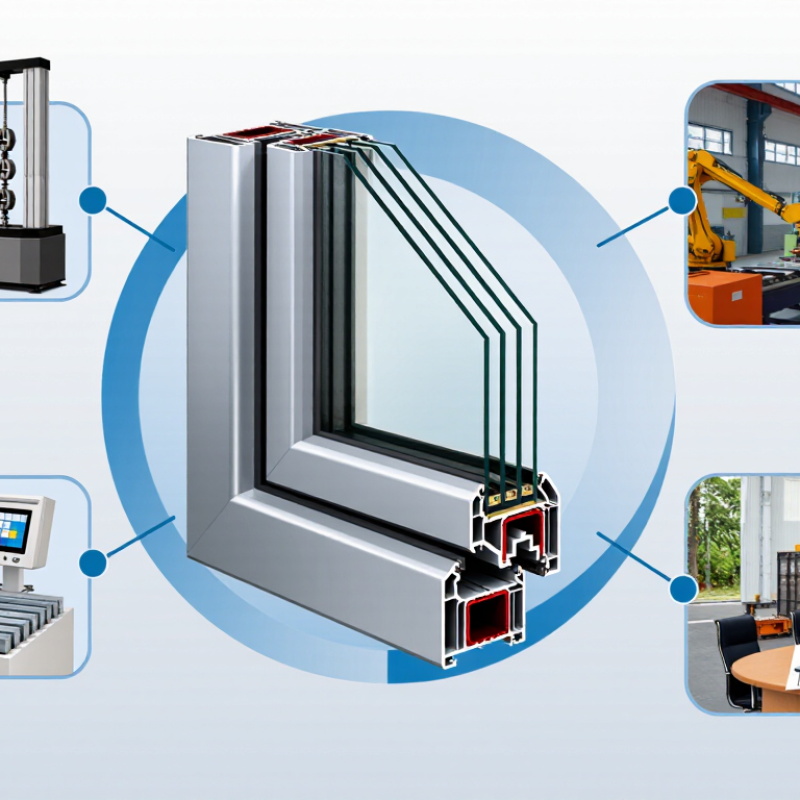
What Are the Top Aluminum Window Manufacturers in China?

Defining China’s Aluminum Window Manufacturing Industry

China’s aluminum window manufacturing industry is a broad, highly coordinated production network. It combines aluminum extrusion, profile design, hardware fitting, glass processing, and final assembly. Many manufacturers operate near established industrial clusters, where suppliers share machinery, engineering skills, and logistics services. This structure helps control costs and shorten production cycles.

The process usually begins with aluminum billets, which are heated and pressed through custom dies. Profiles may then receive powder coating, anodizing, or wood-grain finishes. Thermal-break systems use reinforced polyamide strips to reduce heat transfer. In practical factory assessments, engineers should inspect corner joints, drainage paths, gasket placement, and surface consistency. Small defects become obvious when rainwater reaches a poorly sealed frame.

Quality depends on more than attractive samples. Reliable manufacturers maintain testing records for air leakage, water penetration, wind pressure, and repeated opening cycles. They should also explain glass specifications, coating thickness, tolerances, and packaging methods clearly. Export experience matters because regional building codes and installation conditions vary widely. Still, factory claims require verification. A polished showroom can hide weak process control. Independent inspections and trial orders remain sensible, especially for large projects. Not every low quote is efficient. Sometimes, it signals thinner profiles, simpler hardware, or limited after-sales support.

What Are the Top Aluminum Window Manufacturers in China?

Defining China’s Aluminum Window Manufacturing Industry

Thermal transmittance, or U-value, is a practical benchmark for evaluating aluminum window systems. Lower values indicate better insulation performance. The reference figures represent commonly specified system-level performance ranges for different aluminum window and glazing configurations; actual results vary by profile design, glass specification, spacer, size, and installation quality.

Key Criteria for Evaluating Chinese Aluminum Window Manufacturers

What Are the Top Aluminum Window Manufacturers in China?

Choosing among Chinese aluminum window manufacturers requires more than comparing catalogues and prices. Start with verified performance. The IEA and UNEP 2023 Global Status Report for Buildings and Construction states that buildings used about 30% of global final energy in 2022. That figure makes thermal performance a purchasing issue, not a decorative feature. Ask for tested U-values, air leakage, water tightness, and wind-load results for the exact window configuration. Generic laboratory sheets are weak evidence.

A reliable factory should explain the alloy grade, wall thickness, thermal-break material, hardware source, and coating process. Request batch records and sample sections. China’s GB/T 8478-2020 standard provides a useful reference for aluminum doors and windows, but compliance claims still need independent verification. Look for reports from accredited laboratories, clear test dates, and traceable sample numbers. Do not accept a certificate with no model details.

Installation deserves equal scrutiny. The best frame can leak when drainage paths, anchors, or perimeter seals are poorly installed. Evaluate factory drawings, packing methods, site guidance, replacement parts, and response times. Export experience helps, yet it is not proof of quality. I would inspect a finished project, preferably after one winter and one wet season. That is inconvenient. It may reveal problems polished brochures never show.

Leading Aluminum Window Manufacturers in China

Leading aluminum window manufacturers in China typically combine large-scale production with project-specific engineering. Their stronger facilities use thermal-break profiles, precision extrusion, CNC cutting, and insulated glass assembly. In practice, buyers should inspect profile thickness, corner joints, drainage paths, and gasket fit. These small details often decide whether a window performs well after several winters. A clean showroom is not enough. Ask for production photos, material traceability, and recent test reports.

Reliable manufacturers explain air infiltration, water resistance, wind-load testing, and thermal values in measurable terms. They should provide drawings, hardware schedules, packing methods, and installation guidance before a deposit is considered. Experienced suppliers also check local climate, opening size, glass weight, and building movement. A coastal project may need stronger corrosion protection, while a cold region may require better spacer systems. Sample approval matters because catalog images can hide frame depth or uneven finishes.

Factory communication reveals expertise. Technical staff should answer clearly, not merely promise “best quality.” During inspection, compare random units with approved samples and record any deviation. No factory is perfect. I would also question unclear tolerances, rushed lead times, and unexplained substitutions. These concerns are not accusations; they are practical safeguards. A manufacturer earns trust through repeatable workmanship, honest documentation, and responsive after-sales support, not through the lowest quotation.

Comparing Product Quality, Certifications, and Customization Options

Choosing top aluminum window manufacturers in China requires more than comparing catalog prices. Product quality begins with alloy control, thermal breaks, drainage design, and repeatable factory testing. The 2024 International Energy Agency buildings report states that buildings consume about 30% of global final energy. Therefore, frame strength and verified air leakage matter as much as appearance.

Reliable suppliers should provide traceable material records and factory quality procedures certified to ISO 9001. For export projects, ask for test evidence aligned with EN 14351-1, ASTM standards, or local performance codes. Check thermal transmittance, water penetration, wind resistance, and acoustic results. A certificate alone is not proof. Testing scope, sample size, and report dates can change the meaning.

Customization separates capable manufacturers from simple fabricators. Experienced plants can adjust mullion depth, glass thickness, opening styles, hardware, colors, and insect-screen systems without weakening performance. Powder coating should be reviewed against standards such as AAMA 2603, 2604, or 2605, depending on exposure. The Global Aluminum Market Outlook has repeatedly identified construction as the dominant aluminum-use sector, increasing pressure for efficient and durable systems. Still, published data is not always comparable. I would request a production sample, corner test, coating sample, and installation drawing before approving a large order. Mistakes often appear at the interface between window and wall.

How to Select the Right Chinese Aluminum Window Manufacturer

Choosing the right Chinese aluminum window manufacturer requires more than comparing catalog prices. A reliable supplier should explain its extrusion grade, profile thickness, thermal-break design, and surface treatment clearly. Ask for test reports covering air leakage, water penetration, wind pressure, and thermal performance. These documents should match your project’s required standards, not merely show general factory results. Request a full-size sample with glass, hardware, drainage holes, gaskets, and corner joints. Small details matter.

During factory evaluation, inspect extrusion lines, powder-coating areas, assembly tables, and finished-goods storage. Check whether profiles are protected before loading. Review quality records, inspection frequency, and the process for handling damaged units. A video tour helps, but it cannot replace independent verification. I have seen attractive samples fail because the production batch used thinner profiles or poorly fitted seals. That mistake was expensive. Do not ignore it.

Communication is another practical test. Send one detailed drawing and ask for a quotation with dimensions, materials, tolerances, packaging, lead time, and warranty terms. A professional manufacturer will identify unclear points instead of guessing. Confirm whether the company produces windows directly or outsources key processes. Discuss replacement parts and after-sales support before placing an order. No checklist is perfect. Still, careful sampling, factory review, and written specifications greatly reduce avoidable risk.

What Are the Top Aluminum Window Manufacturers in China? - How to Select the Right Chinese Aluminum Window Manufacturer
Evaluation Dimension Reliable Selection Benchmark Documents or Data to Request Suggested Weight Key Questions for the Manufacturer
Product Compliance The product should be designed and tested according to the standards required in the destination market, such as GB/T 8478-2020 for Chinese aluminum windows and doors, EN 14351-1 for applicable European projects, or relevant North American requirements. Current product test reports, declarations of performance where applicable, technical datasheets, and standard references for each window series. 15% Which standard applies to this series, and which independent laboratory performed the testing?
Air Permeability Lower air leakage generally indicates better sealing performance. The required class or level should match the building code, climate, and project specification. Air-permeability test results showing the test method, pressure range, specimen size, and measured leakage rate. 10% What is the tested air-leakage result, and was the test conducted on a representative production configuration?
Watertightness The window should resist water penetration at a pressure level appropriate for the building location and exposure. Coastal, high-rise, and storm-prone projects usually require more demanding performance. Water-penetration test report, test pressure, duration, specimen configuration, and installation details. 12% What pressure level was achieved without water penetration, and were drainage paths included in the test?
Structural Performance Frames, mullions, glass, and hardware should withstand the design wind load without unacceptable deflection, permanent deformation, or operational failure. Structural calculations or laboratory reports covering wind-load resistance, deflection limits, span conditions, and glass specifications. 12% What design wind pressure and maximum span can the selected system safely support?
Thermal Performance For energy-efficient buildings, thermally broken aluminum systems with suitable glazing and spacers are generally preferable to non-thermally broken systems. U-value calculations or test results for the complete window, including frame, glass, spacer, and documented calculation assumptions. 10% Is the quoted U-value for the whole window or only for the glass, and what frame and glass configuration was used?
Aluminum Alloy and Finish The alloy, temper, coating type, coating thickness, and color should be specified clearly. Common exterior finishes include powder coating, anodizing, and PVDF coating, each with different service and appearance characteristics. Mill certificates, coating specifications, color references, coating-thickness records, and applicable weathering or adhesion test results. 10% Which alloy and temper are used, what is the coating system, and how is color consistency controlled between batches?
Glass and Hardware Quality Glass thickness, safety treatment, laminated or insulating construction, seals, rollers, locks, hinges, and fasteners should be selected for the intended application and local regulations. Glass certificates, hardware specifications, sealant data, safety-glazing information, and approved component lists. 10% Which components are included in the quotation, and are substitutions permitted without written approval?
Manufacturing Capability A suitable factory should demonstrate stable production control, traceability, calibrated equipment, and capacity compatible with the required order volume and delivery schedule. Factory audit records, production-line photographs or video, equipment list, quality-control procedures, and batch-traceability examples. 10% What is the monthly capacity for the selected series, and how are profiles, glass, hardware, and finished units tracked?
Quality Management A documented quality-management system, such as ISO 9001 certification, can support consistent processes, but certification should be verified and should not replace product testing. Valid certificate issued by an accredited certification body, inspection plans, nonconformance records, and corrective-action procedures. 7% How are incoming materials, in-process dimensions, assembly quality, and final appearance inspected?
Customization and Technical Support The manufacturer should be able to review drawings, confirm interfaces, coordinate glass and hardware selections, and provide shop drawings before mass production. Sample shop drawings, section details, installation manuals, BIM or CAD files where available, and a documented approval workflow. 6% Who checks project drawings, how are revisions controlled, and what information is required before production approval?
Packaging and Logistics Export packaging should protect finished frames, glass, and hardware from moisture, abrasion, impact, and deformation during handling and transportation. Packaging specifications, loading photographs, container-loading plan, shipping terms, and procedures for damage or shortage claims. 4% How are glass and finished frames separated, labeled, secured, and inspected before container loading?
Warranty and After-Sales Service The contract should define warranty duration, covered components, exclusions, response times, spare-part availability, and the process for handling defects. Written warranty terms, service-contact details, spare-parts policy, claim procedure, and anonymized records of completed projects. 4% What is covered by the warranty, how are installation-related issues separated from manufacturing defects, and how quickly are claims handled?

FAQS

What performance tests should a buyer request for aluminum windows?

Request tested U-values, air leakage, water tightness, and wind-load results for the exact configuration. Generic reports are weak evidence.

Why must the test report match the exact window model?

Glass, frame depth, hardware, and opening size can change performance results. A certificate without model details proves little.

Which material details should a factory disclose?

Ask for the alloy grade, wall thickness, thermal-break material, hardware source, and coating process. Request batch records and sample sections.

Is compliance with a national standard enough?

No. A relevant standard helps, but independent verification remains necessary. Check test dates and traceable sample numbers.

How can installation affect window performance?

Poor anchors, blocked drainage, or weak perimeter seals can make a strong frame leak. The frame is not everything.

What should buyers inspect during a factory visit?

Compare random units with approved samples. Check corner joints, gasket fit, drainage paths, profile thickness, and finish consistency. Small flaws can grow.

Does export experience guarantee consistent quality?

No. Export history is useful, but it does not prove repeatable workmanship. Inspect a completed project after winter and a wet season, if possible.

What project conditions should the manufacturer evaluate?

The factory should review climate, opening size, glass weight, building movement, and corrosion exposure. Coastal sites may need stronger protection.

What documents should buyers receive before paying a deposit?

Request drawings, hardware schedules, packing methods, installation guidance, test reports, and replacement-part details. Clear answers matter.

How can factory communication reveal reliability?

Technical staff should explain measurements, tolerances, substitutions, and lead times clearly. “Best quality” is not evidence.

Conclusion

China’s aluminum window manufacturing industry offers a broad range of products for residential, commercial, and industrial applications. Manufacturers vary in production scale, technical expertise, material selection, energy efficiency, and ability to handle customized designs. When evaluating suppliers, buyers should consider aluminum alloy quality, thermal performance, surface treatments, manufacturing equipment, quality-control procedures, production capacity, delivery reliability, and after-sales support. Certifications and compliance with relevant building and safety standards can also provide greater confidence in product consistency and performance.

Leading manufacturers are generally distinguished by their ability to combine dependable product quality with flexible customization, including different profiles, finishes, glass configurations, opening styles, and dimensions. Selecting the right Chinese Aluminum Window manufacturer requires comparing samples, certifications, testing information, communication efficiency, minimum order requirements, pricing, and project experience. A careful assessment of technical capabilities and service responsiveness can help buyers establish a reliable partnership and choose solutions that meet both design expectations and long-term functional requirements.

Ethan

Ethan

Ethan is a seasoned marketing professional with a deep expertise in our company's innovative product line. With a passion for sharing knowledge and insights, he takes the lead in regularly updating our corporate blog, where he explores industry trends, product features, and effective marketing......