Why Choose an Aluminium Washroom Door for Global Projects?

Time:2026-09-30 Author:Henry
0%

Why Choose an Aluminium Washroom Door for Global Projects?

Global washroom projects demand more than attractive finishes. They need durable materials, predictable maintenance, and reliable performance across different climates. An Aluminium Washroom Door can support these requirements with a strong, lightweight frame and corrosion-resistant surfaces. In busy airports, schools, hospitals, and commercial towers, this matters. Doors may open hundreds of times each day.

The International Aluminium Institute reports that nearly 75% of all aluminium ever produced remains in use today. The Aluminium Association also identifies aluminium as highly recyclable without losing its essential properties. John Weritz, former Vice President of Sustainability at The Aluminum Association, stated, “Aluminium can be recycled over and over again without losing its properties.” This circular potential can support responsible procurement, especially when projects include documented recycling pathways.

There are practical advantages. Aluminium doors resist moisture, support accurate fabrication, and allow flexible powder-coated finishes. A clean, satin surface can make a compact cubicle feel brighter. Still, aluminium is not a perfect answer. Poor coating preparation, unsuitable hardware, or weak installation can reduce service life. That uncomfortable detail deserves attention.

Project teams should check alloy specifications, coating standards, fire requirements, accessibility needs, and local maintenance capacity. They should also request environmental product data where available. The right decision depends on use, location, and budget. Aluminium Washroom Door systems become valuable when design evidence supports the choice, not when sustainability claims remain unverified.
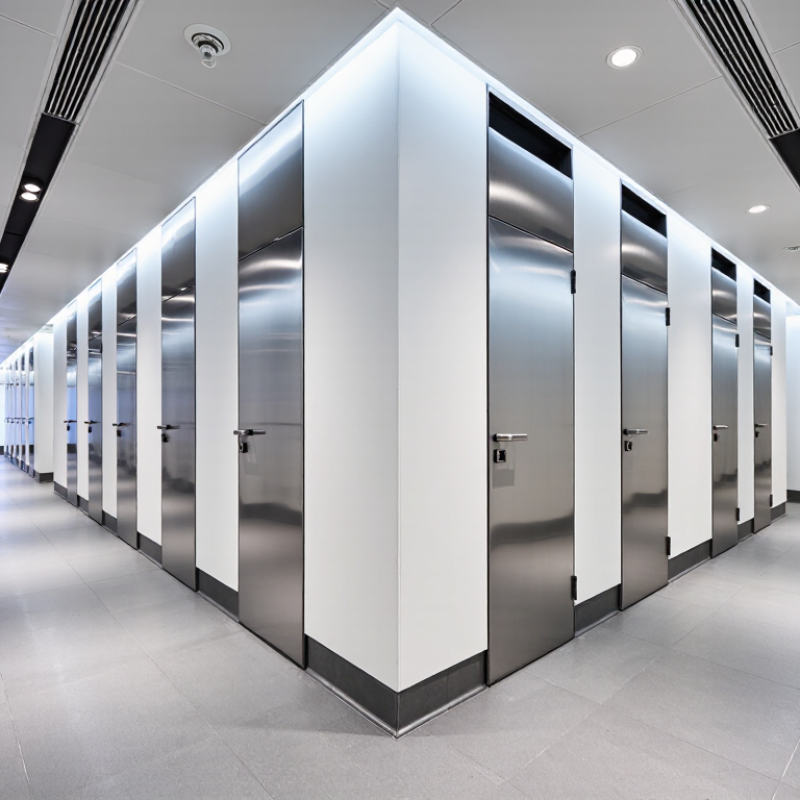
Why Choose an Aluminium Washroom Door for Global Projects?

What Is an Aluminium Washroom Door?

Why Choose an Aluminium Washroom Door for Global Projects?

An aluminium washroom door is a complete door system, not simply a metal sheet. It usually combines an aluminium frame, a lightweight infill panel, hinges, locks, and protective surface finishes. The frame supports repeated opening and closing in humid, heavily used spaces. Unlike untreated steel, aluminium naturally forms a thin oxide layer that helps resist corrosion. However, it is not maintenance-free. Hardware and damaged coatings still require inspection.

Its practical value becomes clearer on international projects. The International Aluminium Institute’s Aluminium Sector Greenhouse Gas Pathways to 2050 reports that recycling aluminium uses about 5% of the energy required for primary production. The material is also light, which can reduce handling effort during installation. A well-designed door can fit hospitals, airports, schools, and commercial buildings. Still, performance depends on the alloy, panel core, coating, and fixing details. This is where specifications often become vague.

According to ISO 9227, corrosion testing uses salt spray exposure to evaluate coated materials and hardware. That test does not perfectly reproduce every washroom environment. Cleaning chemicals, standing water, and poor ventilation can change results. Project teams should therefore verify door dimensions, fire requirements, accessibility clearances, and local standards before production. Aluminium is a strong option, but careless detailing can weaken its advantages.

Why Aluminium Suits Washroom Environments

Why Choose an Aluminium Washroom Door for Global Projects?

Washrooms expose doors to moisture, steam, cleaning chemicals, and constant impact. Aluminium suits these conditions because it does not absorb water or swell like untreated timber. Its light weight also reduces strain on hinges and frames during heavy daily use.

In project inspections, small details matter. Sloped edges, sealed joints, and replaceable hardware often prevent larger maintenance problems.

The International Aluminium Institute reports that recycled aluminium can require up to 95% less energy than primary aluminium production. This supports lower-impact material planning when recycled content is traceable and properly specified. Aluminium can also be anodised or powder-coated for added surface protection.

However, the finish is not magic. Scratches, salt deposits, and aggressive cleaners may still damage poorly selected coatings.

The WHO and UNICEF Joint Monitoring Programme reported that 3.5 billion people lacked safely managed sanitation services in 2022. Global washroom projects therefore need durable, cleanable components, not merely attractive interiors. Smooth aluminium surfaces allow routine wiping, while corrosion-resistant fasteners help maintain reliable operation in humid rooms.

Cleaning schedules should follow the finish manufacturer’s chemical guidance. That point is sometimes overlooked. A strong door can still fail early when installers use unsuitable detergents or leave water trapped around the frame.

How Aluminium Doors Meet Global Project Standards

Global projects rarely fail because aluminium lacks strength. They fail when details ignore local codes, climate, or daily use. Aluminium washroom doors offer a practical starting point for consistent compliance. Their profiles are light, dimensionally stable, and resistant to routine moisture. In coastal sites, suitable alloy selection and protective finishes matter. Small choices matter.

A project team should check accessibility clearances, opening forces, ventilation, fire strategy, and hygiene requirements before fabrication. Requirements differ between countries and building types. Approved drawings, material certificates, finish data, and test reports should travel with the door schedule. Where fire performance is required, the complete door assembly needs relevant testing. Testing should match the applicable national or regional standard. A panel alone is not enough. One assumption deserves review: a standard detail may not suit every climate. Experienced installers also verify wall conditions, floor levels, and fixing substrates on site.

Aluminium supports repeatable production across schools, hospitals, airports, and commercial facilities. Smooth surfaces simplify cleaning, while replaceable hardware can reduce maintenance disruption. Yet aluminium is not automatically corrosion-proof. Aggressive cleaners, trapped water, and incompatible metals can shorten service life. Use compatible fasteners and clear cleaning instructions. I have seen attractive doors underperform because hinge alignment was rushed. That lesson deserves attention. At handover, record installation checks, cleaning methods, hardware settings, and inspection dates.

Why Choose an Aluminium Washroom Door for Global Projects?

Aluminium doors can be fabricated to meet widely used accessibility clear-opening benchmarks while offering low weight, corrosion resistance, and dimensional flexibility for international washroom projects.

The chart compares commonly referenced minimum clear-opening dimensions: 813 mm under the 2010 ADA Standards, 800 mm under EN 17210, and 850 mm under AS 1428.1. Final dimensions should always be verified against the local code, door type, and approach conditions.

Key Design and Installation Considerations

Why Choose an Aluminium Washroom Door for Global Projects?

Key Design and Installation Considerations

Aluminium washroom doors suit demanding projects because they are light, stable, and resistant to everyday moisture. Project teams should specify the door leaf, frame, hinges, and fasteners as one compatible system. Mixed metals can create corrosion problems in humid or coastal environments. Finish selection also matters. Powder-coated surfaces offer practical protection, but poor preparation may cause early peeling. Sample the finish under actual lighting. Colour shifts between factory samples and installed panels can be surprisingly noticeable.

Accurate site measurement should happen before production. Check wall plumb, floor levels, opening widths, and service routes. Small gaps matter. They affect privacy, cleaning, and hardware movement. Allow suitable clearances for expansion and uneven masonry. Confirm local accessibility, hygiene, and emergency requirements before fixing the frame. Installation crews should use corrosion-resistant fixings and avoid over-tightening, which can distort thin aluminium sections. Door alignment needs testing after nearby partitions are completed.

A recurring mistake is treating aluminium as maintenance-free. That assumption needs correcting. Cleaners may use harsh chemicals, while trapped moisture can damage hinges and seals. Provide a simple maintenance schedule, including hinge checks, surface cleaning, and fastener inspection. On one project, the drawings showed perfect openings, but the finished walls varied by several millimetres. The installation team adjusted the frames on site, yet earlier coordination would have reduced rework and waste. Not every site is predictable.

How to Evaluate Cost, Durability, and Maintenance

Why Choose an Aluminium Washroom Door for Global Projects?

How to Evaluate Cost, Durability, and Maintenance

An aluminium washroom door should be judged by lifecycle value, not only purchase price. A low initial quote may hide frequent hinge replacement, coating damage, or difficult spare-part sourcing. In site inspections, doors near showers often show corrosion first, especially where cleaning chemicals remain on frames. Aluminium performs well when its alloy, surface finish, and hardware suit the local environment. Coastal projects need stronger corrosion protection. High-traffic airports need reinforced hinges and reliable latches. Small details matter.

Tips: Request a full cost breakdown. Check warranty limits, cleaning instructions, replacement hardware, and local service access. Ask for test evidence covering humidity, impact, and repeated opening cycles.

Maintenance should be simple enough for busy facility teams. Smooth, non-porous surfaces reduce dirt buildup and support routine cleaning. Avoid designs with deep grooves or concealed areas that trap moisture. However, aluminium is not maintenance-free. Fasteners need inspection, coatings can scratch, and poorly aligned doors may stress hinges. I would not promise identical performance in every country; water quality, labor skills, and cleaning habits vary. A practical specification allows adjustments without sacrificing safety or appearance. That is often more valuable than an impressive brochure.

FAQS

What is an aluminium washroom door?

It is a complete door system, not only a metal sheet. It usually includes an aluminium frame, infill panel, hinges, lock, and protective finish.

Why are aluminium washroom doors suitable for busy buildings?

Aluminium is light, stable, and suited to humid interiors. It supports frequent opening and closing in schools, hospitals, airports, and offices.

Can aluminium washroom doors resist corrosion?

Aluminium naturally forms a thin oxide layer that helps resist corrosion. However, damaged coatings, hinges, and fixings still need regular inspection.

What specifications should project teams confirm?

Confirm the alloy, panel core, coating, hinges, fasteners, and fixing details. Also check fire requirements, accessibility clearances, dimensions, and local regulations.

How should the installation area be measured?

Check wall alignment, floor levels, opening widths, and nearby service routes. A few millimetres can affect privacy, cleaning, and door movement. Measure twice.

What finish is practical for aluminium washroom doors?

Powder-coated surfaces can provide useful protection when preparation is done correctly. View samples under the actual project lighting. Colours may look different after installation.

What installation mistakes should be avoided?

Avoid mixing incompatible metals in damp or coastal locations. Use corrosion-resistant fixings and do not over-tighten thin aluminium sections. Small errors grow.

Do aluminium washroom doors require maintenance?

Yes. They are not maintenance-free. Clean surfaces, inspect hinges and seals, and check fasteners regularly. Harsh cleaners and trapped water can cause avoidable damage.

Conclusion

An Aluminium Washroom Door is a practical solution for commercial, institutional, and public projects that require durability, hygiene, and consistent performance. Built with corrosion-resistant aluminium components, these doors are well suited to humid washroom environments because they resist moisture, warping, and everyday wear. Their lightweight structure also supports smooth operation, efficient handling, and flexible design options for different layouts and privacy requirements.

For global projects, aluminium washroom doors can be specified to meet relevant safety, accessibility, fire, and performance expectations when the correct materials and hardware are selected. Careful attention should be given to door dimensions, ventilation, privacy, fixing methods, and installation conditions. Project teams should also compare initial cost with service life, cleaning needs, repair requirements, and replacement cycles. With suitable finishes, reliable hardware, and proper installation, an Aluminium Washroom Door can provide long-term value while maintaining a clean, professional appearance.

Henry

Henry

Henry is a dedicated marketing professional with a profound expertise in the company's offerings. With years of experience in the industry, he possesses an impressive understanding of the market dynamics and consumer behaviors that drive success. Henry is committed to sharing his insights through......